The right solution starts with identifying the right problem

Everything H2E does grows out of years of hands-on field work on two products: a complete modular toilet sold through local markets, and nature-based wetlands that treat wastewater for whole neighbourhoods. Both show the same principle: identify the real problem first, then build the product and the local system around it.

Story one: Toilet-in-a-Box

From a field question about why families lacked decent toilets to a modular product built by local enterprises across two regions.

1. The question

Why do so many families still not have a decent toilet?

It would be wrong to assume people don't want one. Every family wants a clean, private, safe and dignified toilet. So we went to the field to find out what was really getting in the way.

Our scoping looked at the whole system around a toilet:

  • Households: interest, willingness and ability to pay, space, health and safety concerns.
  • Finance: whether lenders would offer loans for household sanitation.
  • Supply: who produces and builds what, and how the pieces connect.
  • Government: the role of local authorities and the rules in place.
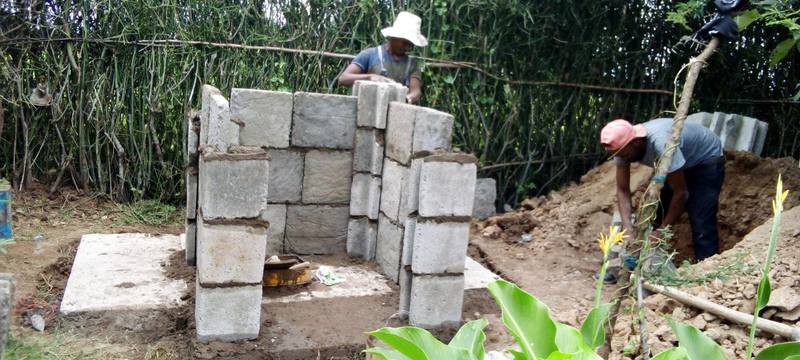
Two artisans building a household toilet from interlocking panels while digging the pit
2. What we found

Two bottlenecks: the product and the ecosystem

An incomplete product

Almost every product on the market was just a toilet slab. The household still had to dig and line the pit, find a mason and build a shelter, often getting the measurements wrong. The result was the dignity deficit: dark, smelly, unsafe latrines that collapse in the rains, especially dangerous for women and children.

A scattered supply chain

No one offered a complete service. Each family had to act as its own contractor: pit diggers, stone suppliers, cement shops, transport and masons, all arranged separately. That meant high costs, long delays, and partial toilets or none at all.

Can we make a cheaper, better and complete on-site toilet, for both wet and dry systems, and a supply chain that can deliver it?

3. From sketch to steel

Designing Toilet-in-a-Box

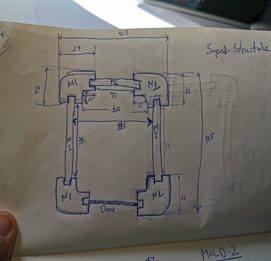
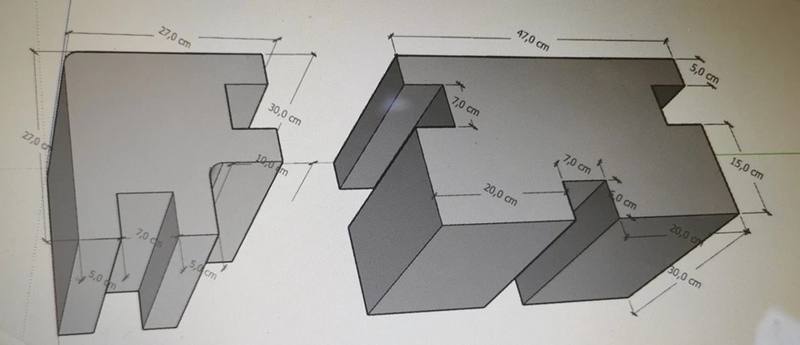
The first concept was drawn with pencil and paper: interlocking panels and joints that make up the pit lining, the slab and the walls, so rooms and pits can simply continue. Each piece had to be light enough for one artisan to handle on site.

The validation loop

  • Getting the fit right: casting trials to tune joint tolerances so panels seat firmly without binding or chipping on site.
  • Same method above and below ground: an artisan who can build the walls can line the pit in exactly the same way.
  • Real households: demonstration units with early adopters to test use, doors and ventilation, cleaning, and the sense of dignity and safety.
  • Built for the rains: a lined pit keeps its shape when the soil is waterlogged, where unlined pits are at risk of collapse.
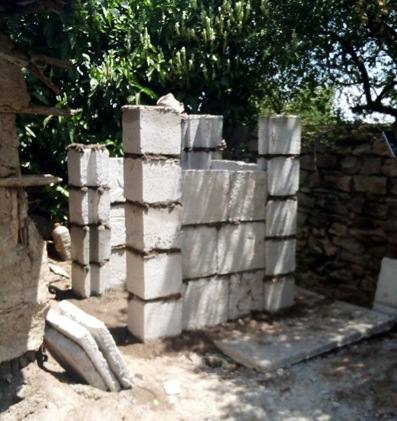
Trial assembly of a toilet superstructure from interlocking precast panels and corner joints
4. Building the ecosystem

A product without a supply chain stays a prototype

We didn't want to become a factory. We wanted local businesses to own production and installation, so the product could outlive any project.

Production and delivery

  1. Mold fabricationPrecision steel molds
  2. Local concrete enterpriseStandard batching and curing
  3. Trained artisansFast, repeatable assembly
  4. Turnkey household toiletOne predictable price

Running in parallel: demand and finance

  1. Targeted marketingPromotion and community events
  2. Eligible demand screeningHouseholds ready to buy
  3. Loan from a local lenderWhen financing is needed
  4. Order placedStraight to the enterprise
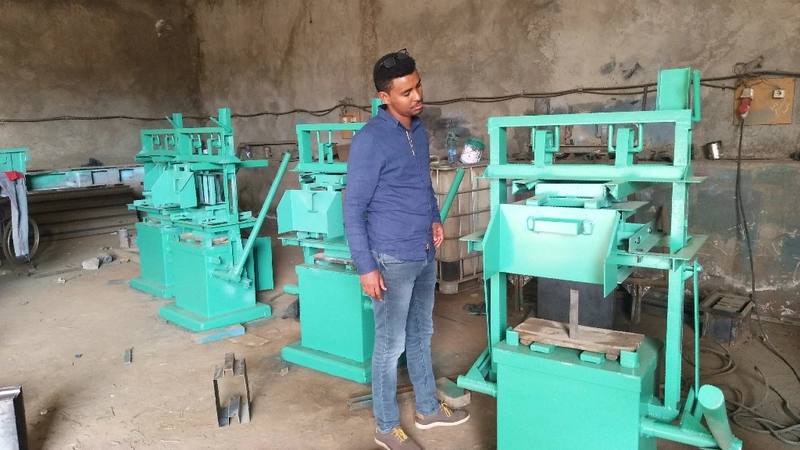
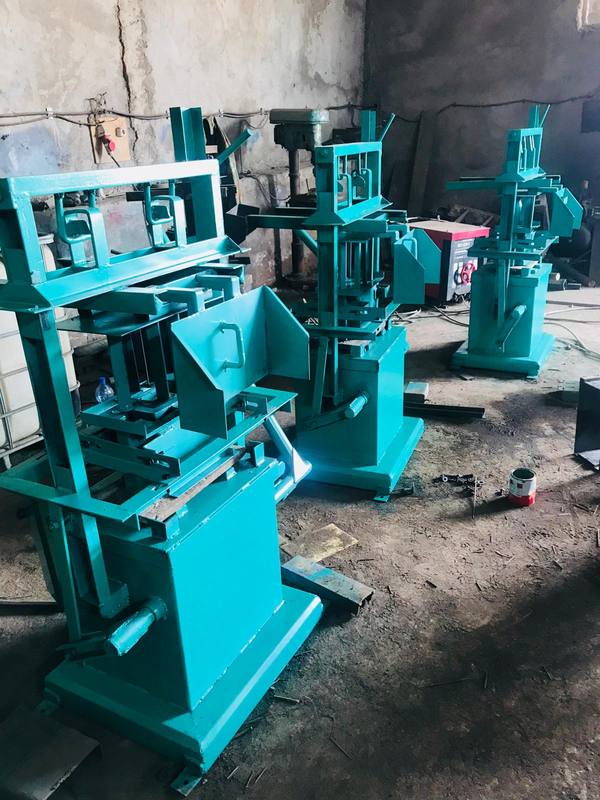
Three green steel molding machines in a fabrication workshop
Steel molds
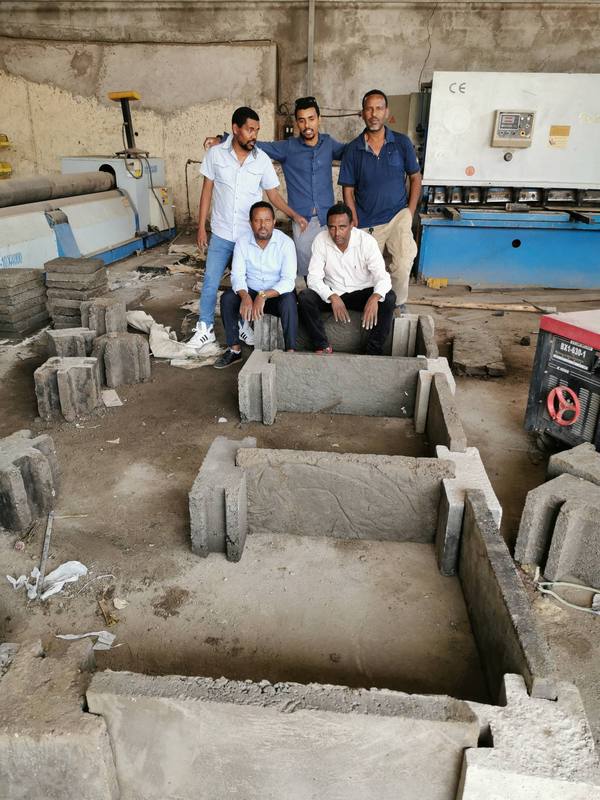
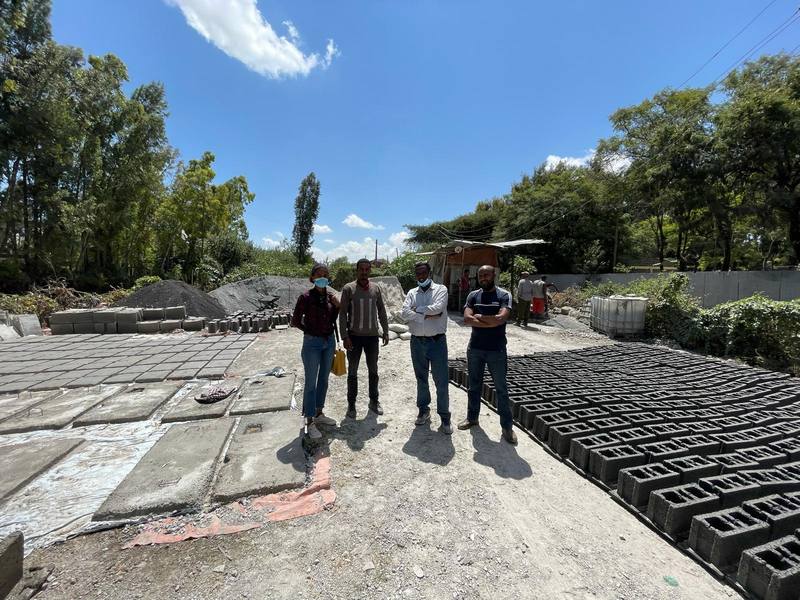
Precast slabs and interlocking blocks curing at a local production yard
Local production yard
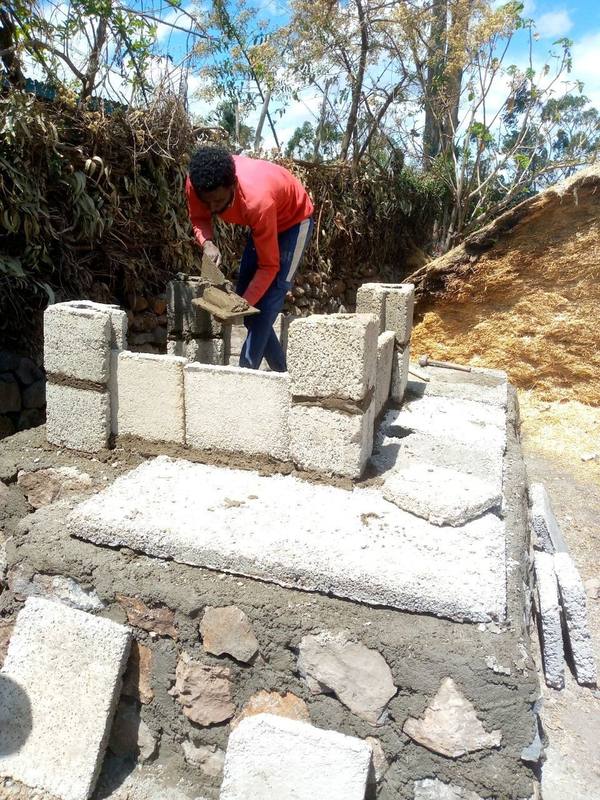
An artisan assembling interlocking wall panels on a finished slab
Artisans assembling on site
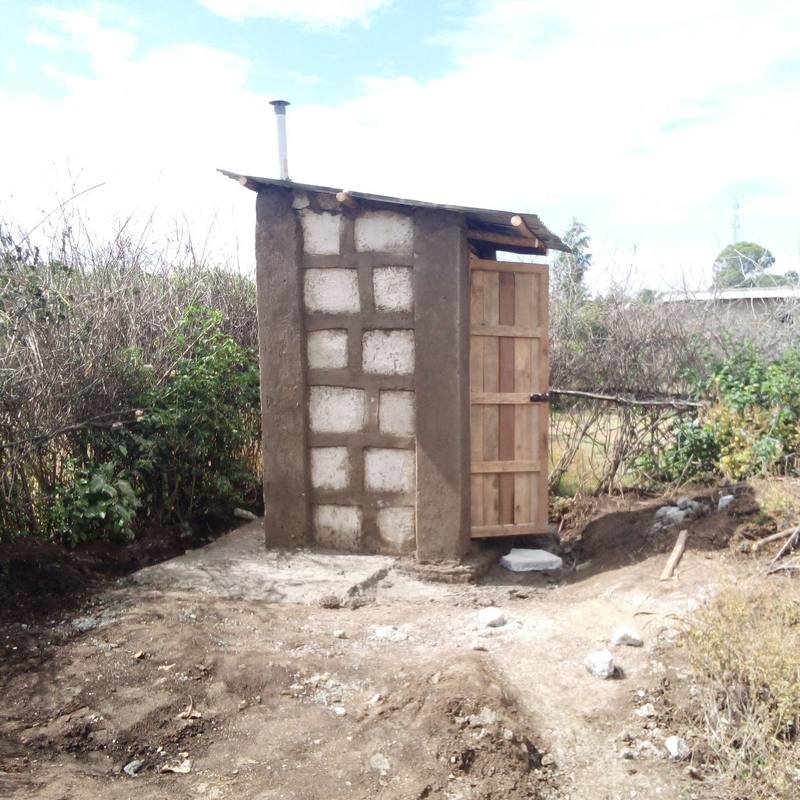
A completed household toilet with interlocking panel walls, a wooden door and a vent pipe
Turnkey household sanitation system
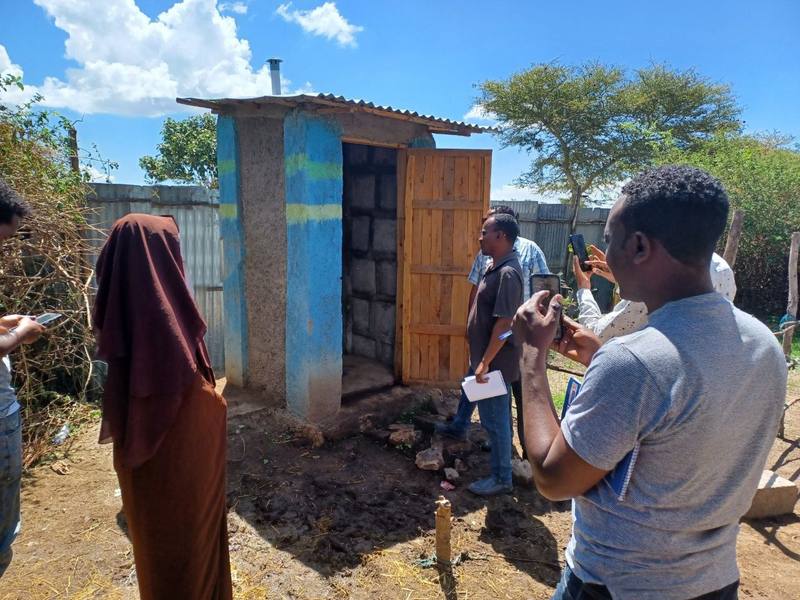
Visitors inspecting a finished toilet with a household member
5. Simple digital oversight

A photo of every step, from every town

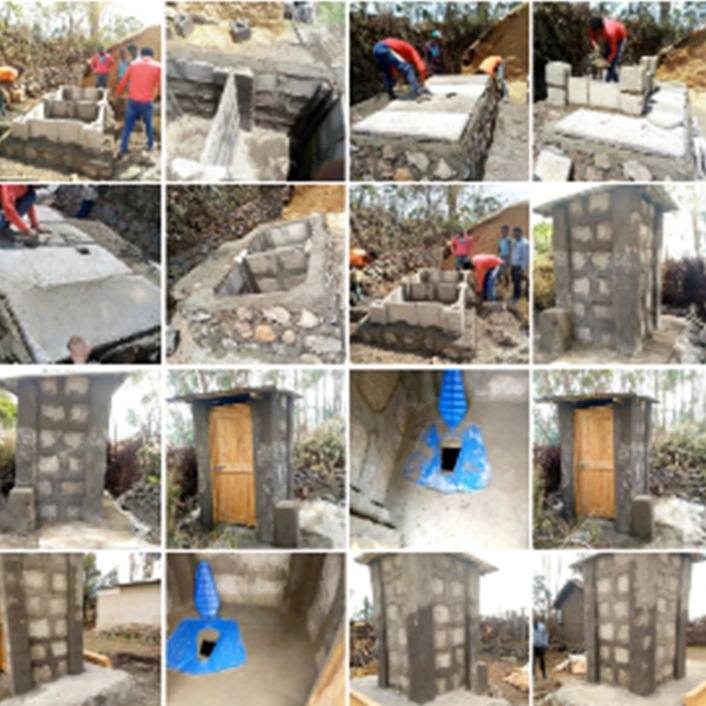
Each town where we worked had its own messaging group. Artisans and supervisors posted photos of every toilet at every stage, from marking out and digging to the last panel and the door.

  • Quality assurance without driving to every site.
  • Accountability for lenders and enterprises before payments were released.
  • Social proof: every new toilet and community event encouraged neighbours to order their own.
6. Pilot to scale

From one town to multiple regions

A first pilot in Adama proved the product, the delivery model and loan repayment. It then expanded to four to five zones of the Oromia region and on to the Amhara region, with consistent quality across many independent enterprises.

Weeks → days
Construction time per toilet
2 regions
Oromia and Amhara, Ethiopia

Story two: Constructed wetlands

Nature-based treatment that turns neighbourhood wastewater into water people can reuse, owned and run by the community.

1. The problem

Wastewater with nowhere safe to go

Growing towns are building condominium blocks faster than sewers and treatment plants. Their wastewater often reaches drains, streets and rivers untreated, and conventional treatment plants are too costly and energy-hungry for many towns to build and run.

We asked a different question: what is the simplest system a community and its water utility can build, afford and operate themselves?

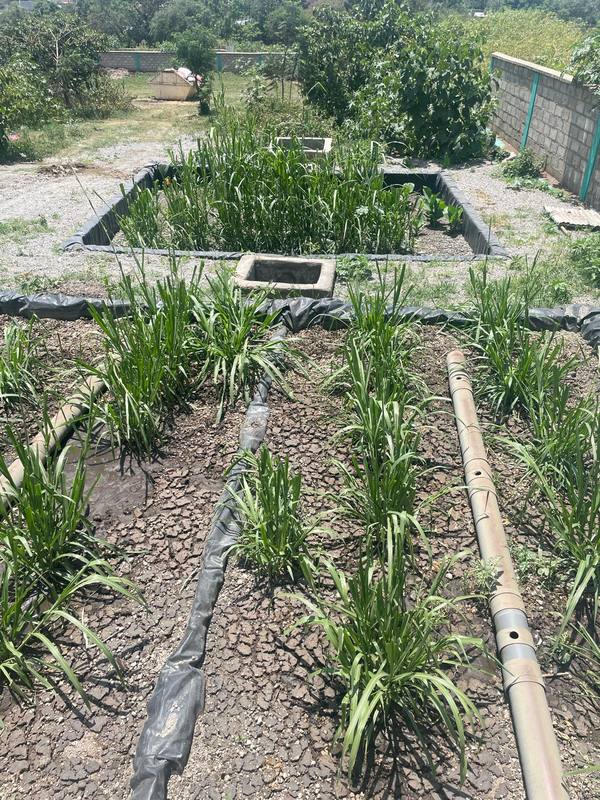
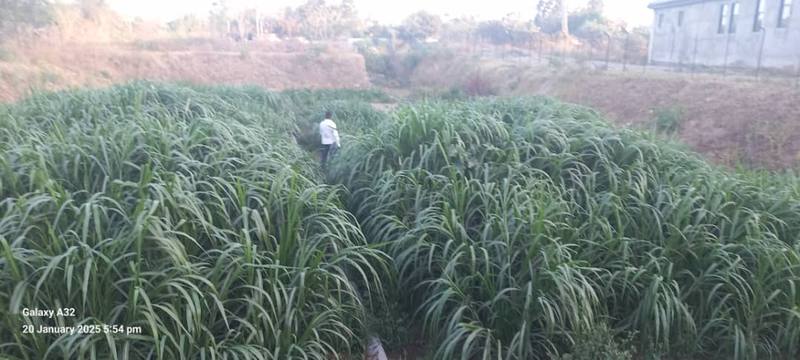
Newly planted wetland beds with distribution pipes
The planted constructed wetland in Adama
2. The solution

Let plants, gravel and bacteria do the work

A constructed wetland passes wastewater slowly through a lined bed of gravel planted with wetland plants. Bacteria living on the roots and gravel break down the pollution. There are no pumps to power and no chemicals to buy.

  • Low running costs: little or no energy, simple routine maintenance.
  • Water to reuse: in Adama, treated water is drawn with a hand pump for toilet flushing and vegetable gardens.
  • A green space, not a plant room: the wetland becomes part of the neighbourhood.
  • Climate-smart: no electricity to fail, treated water for dry seasons, and far less methane than wastewater left in open drains.
3. Built and running

Three wetlands in Adama and Shashemene

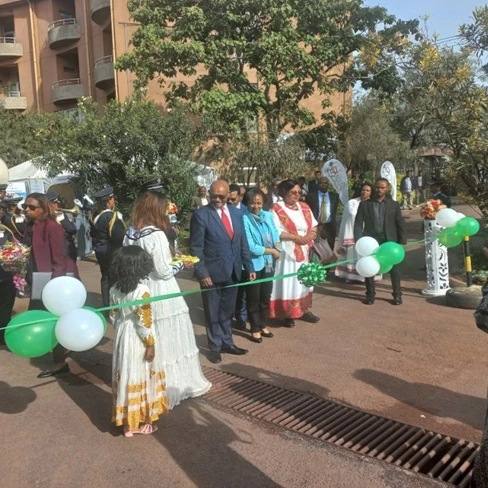
After a pilot phase in 2022 with wetlands in Adama and Shashemene, a third wetland opened in the Dembela neighbourhood of Adama on 9 October 2024. It treats wastewater from three condominium blocks for about 700 residents, who manage it together with the Adama Water Utility.

3
Constructed wetlands built
2 cities
Adama and Shashemene, Ethiopia
~700
Residents served by the Dembela wetland in Adama
9 October
Proposed at the Adama opening as Ethiopia's Constructed Wetland Day

“It has so many benefits and the place looks beautiful.”

Fikerte, resident of Shashemene (quoted by WASTE)

The Adama wetland was inaugurated with community elders, the State Minister for Water Supply and Sanitation and Dutch partners, and is now a reference for nature-based sanitation in Ethiopian towns.

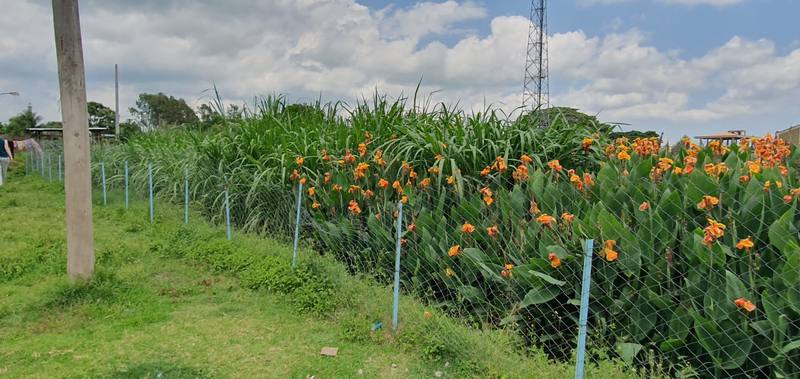
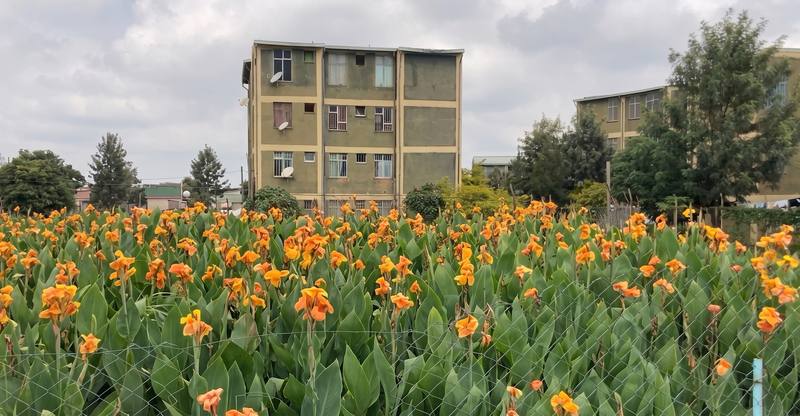
Flowering wetland plants in front of condominium blocks in Shashemene
Constructed wetland, Shashemene
The planted wetland bed in Adama
Constructed wetland, Adama

What both stories taught us

Completeness drives adoption

Families hesitate when they must organise many trades. They invest readily in a complete, standard product.

Design for the artisan

If one mason can lift and fit every piece without machinery, the system works in any village or alley.

Capacity outlives projects

Training fabricators, yard owners and masons builds a market that keeps running when a programme ends.

Local champions make it happen

Field staff and entrepreneurs willing to experiment, fix mix designs and challenge old habits decide success.

Low-tech digital works

Photo-based monitoring on everyday phones gives real-time quality control and builds trust.

Interlock the business, too

Producer, artisan, lender and household must all benefit. Hardware alone is not enough.

Match the system to the operator

Treatment only works if the community and utility can run it in every season. Low energy and simple upkeep beat sophistication, and keep working through power cuts and droughts.

Ownership keeps it running

When residents help plan, build and maintain a system, they protect it long after the opening day.

Recognised by government and civil society

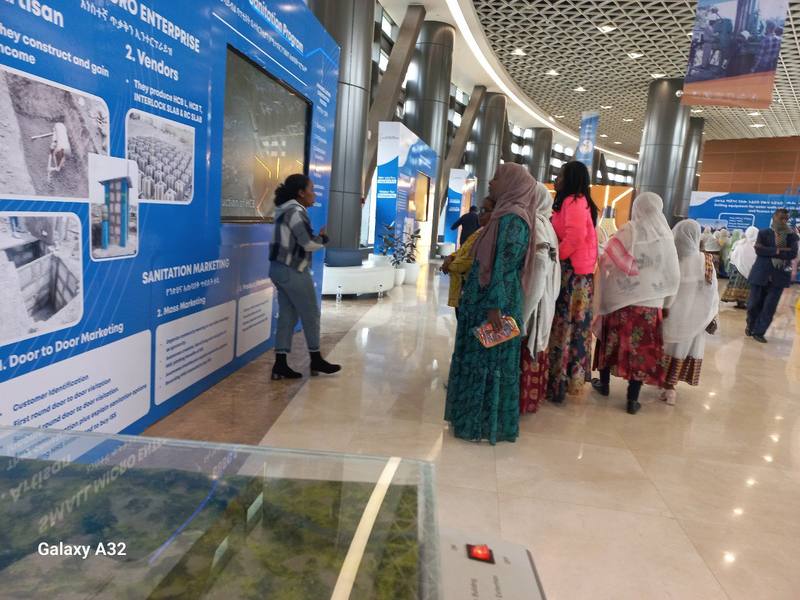
The market-based sanitation exhibit at the Ethiopian Innovation Centre
Featured model

Ethiopian Innovation Centre

Selected as the leading best-practice example of market-based sanitation in Ethiopia. We demonstrated the product and business model to high-level delegations, sector ministries and national development planners, including a visit from the Minister of Health.
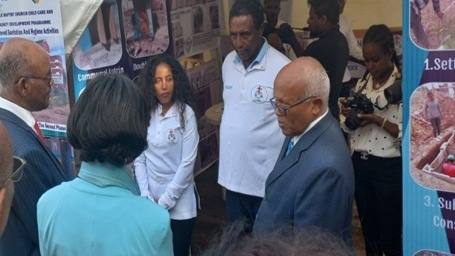
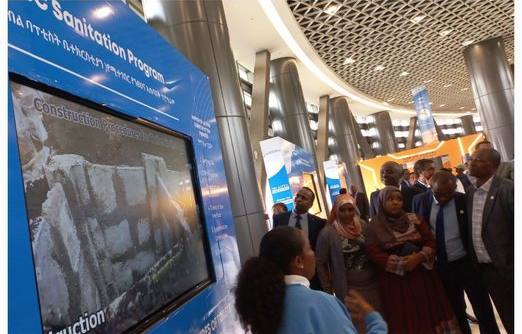
Officials being shown the market-based sanitation stand at the award event
2nd place nationally

CCRDA National Development Award

Runner-up among development and humanitarian projects nationwide, awarded by the Consortium of Christian Relief and Development Associations, the largest umbrella of civil society organisations in Ethiopia.

A double bottom line

We run as a business so the impact lasts. Revenue from products, engineering and training funds the work; the social return is built into how the model works.

Commercial engine

  • Product and mold supply to local producers
  • Engineering design and advisory contracts
  • Training and technical partnership in programmes

Social return

  • Safe, lockable, easy-to-clean toilets that replace hazardous latrines
  • Jobs and income for local enterprises and artisans
  • Money spent on sanitation stays in the local economy
  • Services that hold up through floods and droughts, with lower emissions

Sustainable

Resource recovery, circular solutions and lower emissions.

Inclusive

Local jobs and skills, with safety for women and children.

Climate-resilient

Keeps working through floods, drought and heat.

Scalable

From pilot to region, with consistent quality.

Why H2E Enterprise

Development programmes end, but needs and markets remain. Too often the knowledge, molds and trained people scatter when funding stops, and the next programme starts again from zero.

H2E Enterprise was founded in Addis Ababa by Henock Belete Asfaw to carry this work forward as an independent social enterprise: finding products with real market potential, designing them for a changing climate, building the ecosystem around them, and helping organisations across Africa and Asia use proven solutions instead of reinventing the wheel.

See our approach

The constructed wetland in Adama

Download this resource

It's free. Tell us who you are and your download starts straight away.

We only use your email to share H2E updates and never pass it on. You can ask us to remove it at any time.