What we do

Three things, always together: we bring the right product, we build the local ecosystem that delivers and maintains it, and we design it to be climate-smart.

1. Products & Solutions

Three solution families, from the household to the treatment plant to the farm

We are open about where each product stands, from proven and scaling to pilots and research.

Market-Based WASH Products

Products households buy, made and installed by local enterprises and artisans.

Proven, scaled to 2 regions

Toilet-in-a-Box

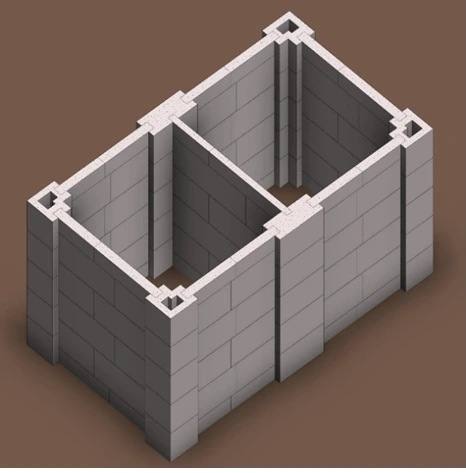
A complete modular toilet: pit lining, slab and walls from the same interlocking precast panels, produced locally and assembled by trained artisans.
  • Complete: substructure, slab and superstructure designed to fit together.
  • Built by hand: every panel can be carried and placed by one artisan.
  • Flexible: single or twin pits, extra rooms or showers; pour-flush or dry VIP.
  • Fast: built in days, not weeks.
3D design of a twin-pit lining built from interlocking precast panels
The design: twin-pit lining
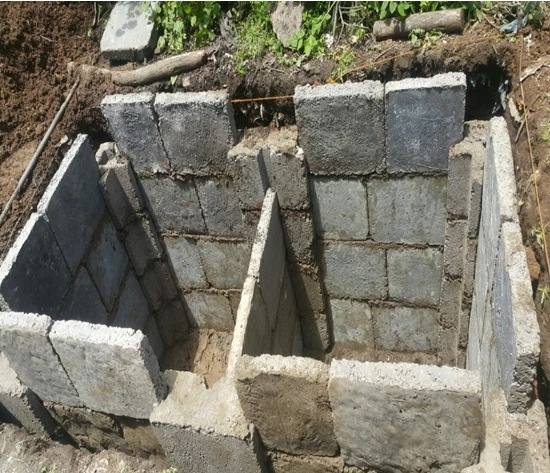
A twin-pit lining built from precast panels in the field
Built in the field
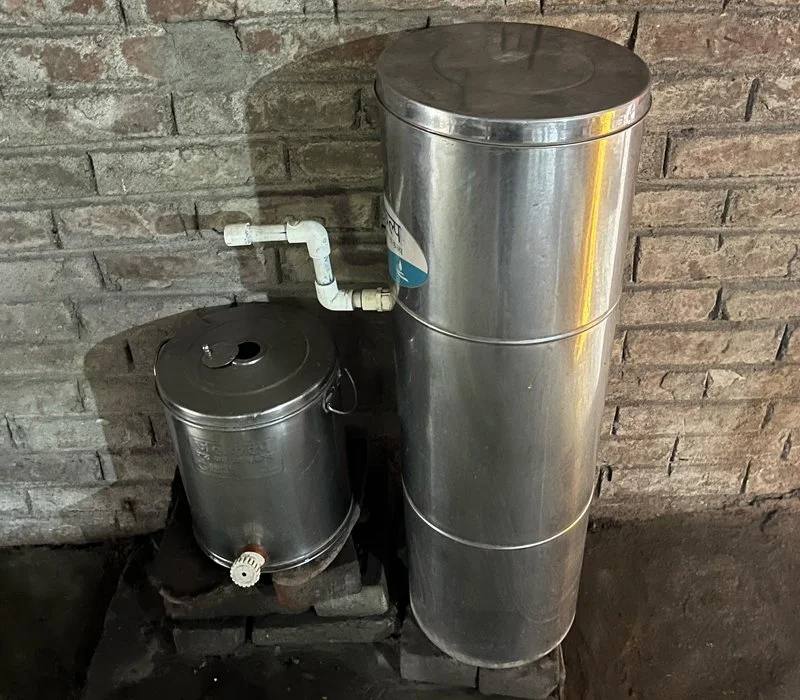
A stainless-steel biosand filter installed in a home in Bihar, India
A biosand filter in a home in Bihar, India. Photo: CAWST, CC BY-SA 4.0
In development

HWTS: the biosand filter

Safe drinking water at home, with filters produced and serviced by local enterprises.

  • Sand and gravel filtration that removes most pathogens and turbidity, with no chemicals or electricity.
  • Concrete, plastic or stainless-steel containers made with local materials.
  • A product line for local producers, with installation and user follow-up.
Pilot

Safe pit emptying

Portable PuPu pumps for dense settlements and narrow paths that vacuum trucks cannot reach, run as a service business by trained local operators, with sludge taken to treatment, not dumped.
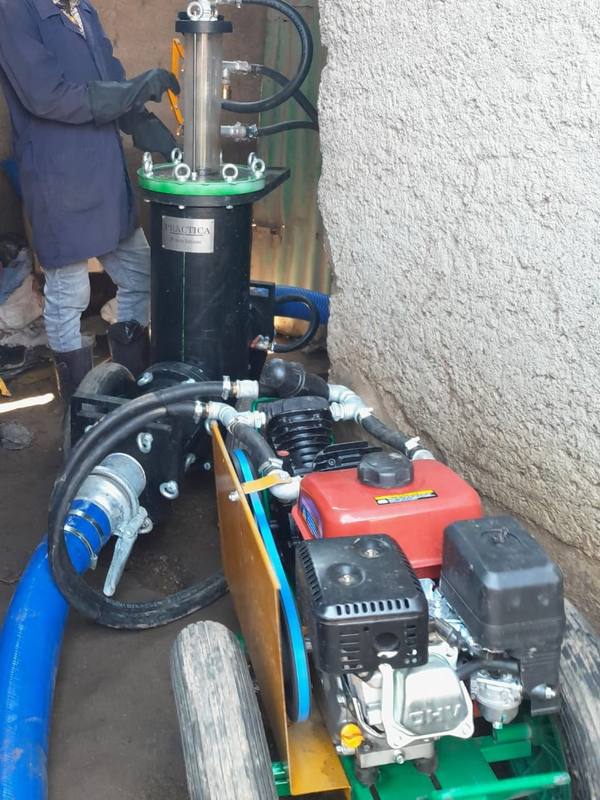
A trained operator running a portable PuPu pit-emptying pump in a narrow passage between houses

DEWATS: Decentralised Wastewater Treatment Systems

Robust, low-energy treatment for institutions, housing, secondary towns and faecal sludge, designed around local operating budgets.

Proven, 3 built, ready to scale

Constructed wetlands

Nature-based treatment using planted gravel beds, with almost no energy and simple upkeep.
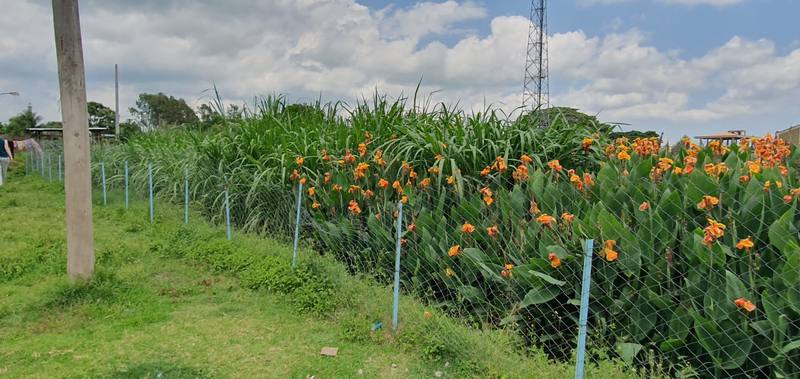
  • Three systems built in Adama and Shashemene, Ethiopia (2022 to 2024).
  • The Dembela wetland in Adama serves about 700 residents and is run by the community with the Adama Water Utility. Read the story
  • Treated water reused for toilet flushing and gardens.
The planted constructed wetland in Adama

Anaerobic baffled reactors

A compact, buried tank where wastewater flows up and down through a series of chambers, so bacteria digest the organic load without energy or moving parts. Combined with a wetland, it forms a complete treatment train.

Resource Recovery

Turning faecal sludge and organic waste into products with value, closing the loop between sanitation, energy and agriculture.

Field-tested

Compost and co-compost

A safe soil conditioner made from faecal sludge and organic waste, with box and windrow composting under simple shelters and temperature routines for safe pathogen reduction, sold to farmers.

Research

Biogas

Small digesters that turn sludge and organic waste into cooking energy and a stable soil conditioner, for institutions, farms and communal facilities.
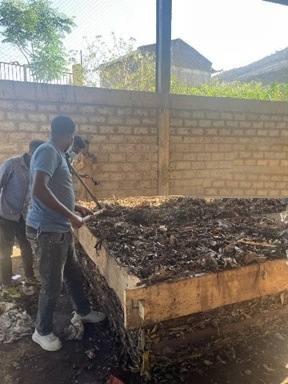
Workers turning compost in a wooden composting box under a shelter
Box composting

Engineering design for wastewater and sludge

Behind the DEWATS and resource recovery families is our engineering design work for municipalities, utilities, institutions and developers.

Decentralised wastewater treatment design

Process sizing, hydraulic profiles, layouts, drawings, bills of quantities and tender documents for nature-based, anaerobic and hybrid systems.

Faecal sludge management and feasibility

Sludge characterisation, emptying and transport assessments, treatment site selection, plant feasibility, and reuse as compost or biogas.

2. Building the Ecosystem

We build the people and businesses behind the product

A product without a supply chain stays a prototype. Local enterprises produce, local artisans install, local lenders finance, and we equip and connect them so the market runs on its own.

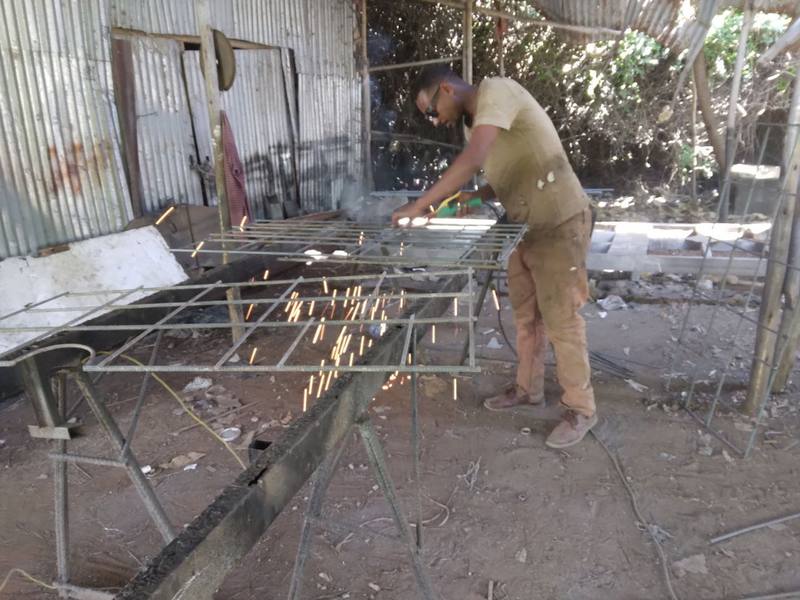
A fabricator welding a steel panel mold

Molds and production standards

Precision steel molds, mix designs, curing routines and quality checklists for local producers.
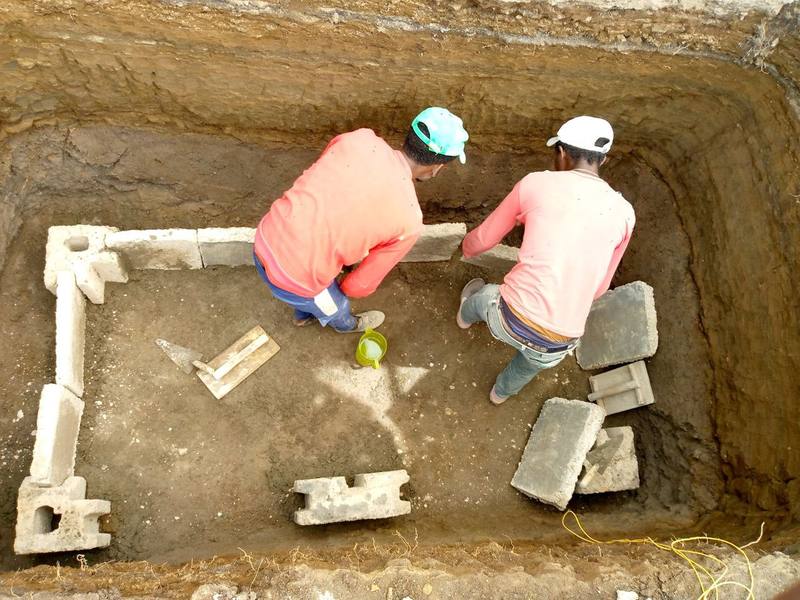
Artisans assembling interlocking pit-lining panels

Artisan training

Hands-on training in setting out, pit lining, levelling, assembly and fittings, with pictorial guides.
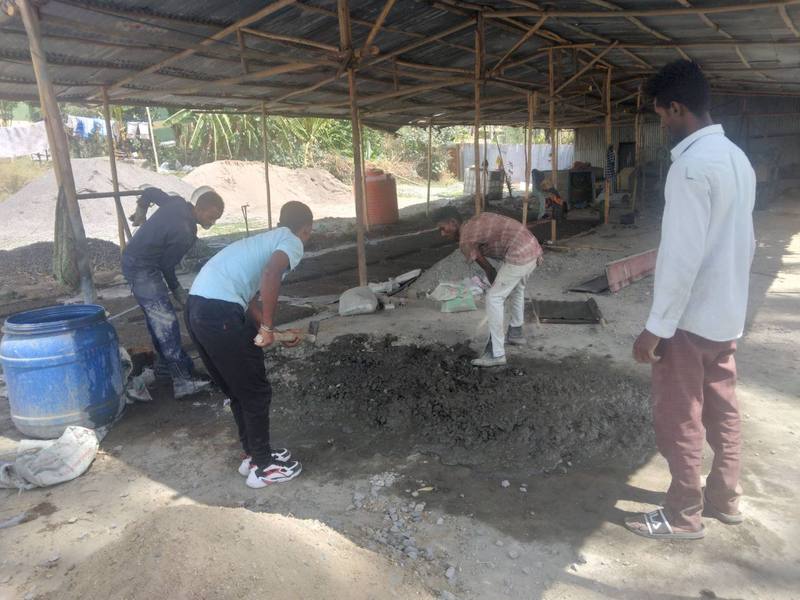
Workers mixing concrete at a small production yard

Enterprise incubation

Costing, pricing, margins, inventory and mold care, so each product line is profitable.
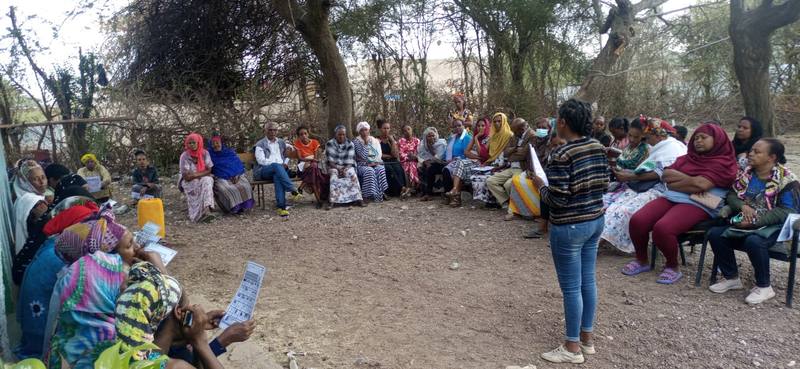
A community sanitation promotion meeting

Demand creation

Promotion, community events and door-to-door marketing that turn interest into orders.
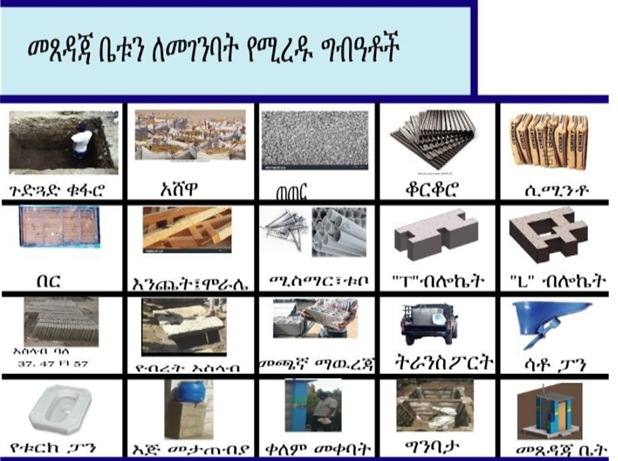
Amharic chart of the materials and services needed to build a toilet, from excavation, sand, cement and blocks to the door, pan, handwashing station and finished toilet

Finance linkage

Screening eligible households and linking them to local lenders, so families can pay over time.
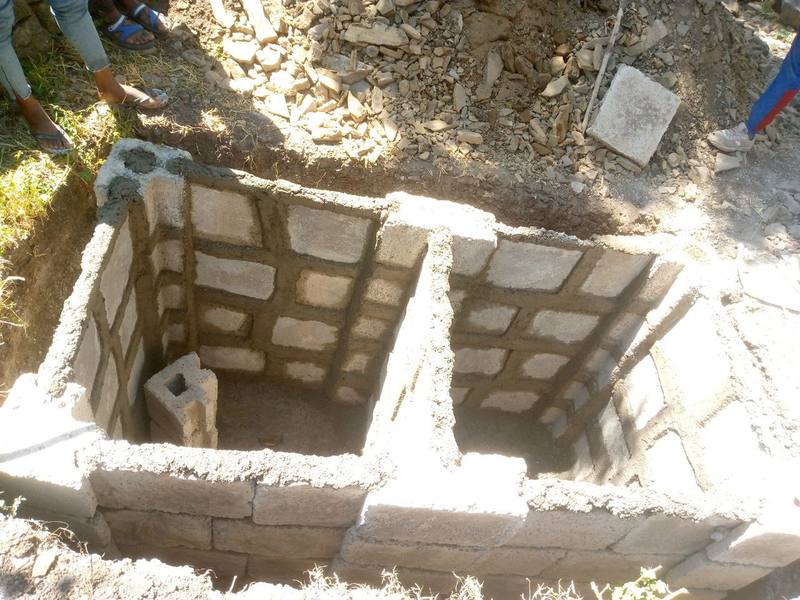
A completed twin pit photographed for quality checks

Quality monitoring

Photo-based digital monitoring of every build, for quality control, lender confidence and reporting.

From interest to an installed toilet

Every household moves through three connected steps. We design each one so as few buyers as possible drop out along the way.

1Demand

  1. ReachCommunity meetings, events, door-to-door visits and product promotion
  2. ExplainThe household's needs, the benefits and the sanitation options
  3. RegisterA list of interested households
  4. Pre-screenWho will pay with a loan, and who will pay in cash

Where buyers drop out: not interested after the first visit. How we reduce it: follow-up visits with a clear offer and a choice of options.

2Finance

  1. ChooseThe household chooses its toilet
  2. LinkIntroduced to a local lender, with the loan criteria explained
  3. ApproveLender screening, contract and loan, individual or in a group
  4. PayAgreed payment terms between household, lender and producer

Where buyers drop out: not eligible for an individual loan. How we reduce it: group loans and cash payment in instalments.

3Construction

  1. AssignA trained artisan and local producer; materials delivered
  2. BuildSite layout, pit lining, slab and walls
  3. CheckQuality checks at each stage, with photos
  4. Hand overFinal check, any corrections, then handover and final payment

Where quality slips: steps skipped on site. How we prevent it: payment is tied to passing each quality check.

Who pays for sanitation?

Lasting sanitation needs money from the right source for each actor, not a permanent subsidy.

Households

Microfinance loans (individual or group), savings cooperatives, or their own savings.

Schools and health posts

Government budgets, parent contributions and company social programmes.

Local enterprises

Credit from local lenders and bridge funding from programmes.

Lenders

Loanable funds from banks and development finance, backed by guarantee schemes that share the risk.

Download these diagrams (PDF)

Support for programmes and partners

Programme diagnostics and scoping

Field studies for donors, NGOs and utilities before a programme is designed: households, finance, supply and government, to find the real bottleneck and the right product.

Technical partner on programmes

A turnkey technical partner in consortia and tenders, bringing tested products, curricula and supply models so budgets aren't spent reinventing prototypes.

Ways to partner with us

Two ready-to-use packages. In each, we deliver the work with you and train your team to do it themselves, so the capacity stays after the programme ends.

Market-based sanitation for a town

We deliver

  1. Situation analysis: households (willingness and ability to pay), suppliers and artisans, lenders, and government offices, plus the local climate risks.
  2. Small-scale pilot: demand creation; climate-proof products and trained artisans and producers; loan products with local lenders.
  3. Refine and scale: review the pilot, adjust demand, supply and finance, then roll out town-wide with emptying and treatment planned in.

We train your team

  • How to run a situation analysis
  • Marketing and demand creation
  • Working with lenders on sanitation loans
  • Molds, technologies and climate-proof construction
  • Organising the supply and construction chain

Nature-based wastewater treatment for a site

We deliver

  1. Feasibility study: data collection, site and climate risk assessment.
  2. Design: pre-feasibility and final design of horizontal or vertical flow constructed wetlands, by gravity or pumped.
  3. Construction supervision with local contractors.
  4. Operation and maintenance guidelines and handover to the community, institution or utility.

We train your team

  • How to run a feasibility study
  • Constructed wetland design
  • Step-by-step construction
  • Operation and maintenance

Download the partnership offer (PDF)How we work: our approach

3. Climate-Smart Design

Climate-smart by design

Climate damages sanitation. Floods wash pit and septic tank contents into homes and water sources, droughts leave flush toilets dry, heavy rain collapses unlined pits, and emptying trucks cannot reach flooded neighbourhoods.

Sanitation drives climate change. Excreta decomposing without oxygen in pits, tanks and drains releases methane. In Kampala, a whole-city study found sanitation produces about 189 kilotonnes of CO₂ equivalent a year, more than half of the city's emissions.

Source: Johnson et al. (2022), Communications Earth & Environment 3, 80.
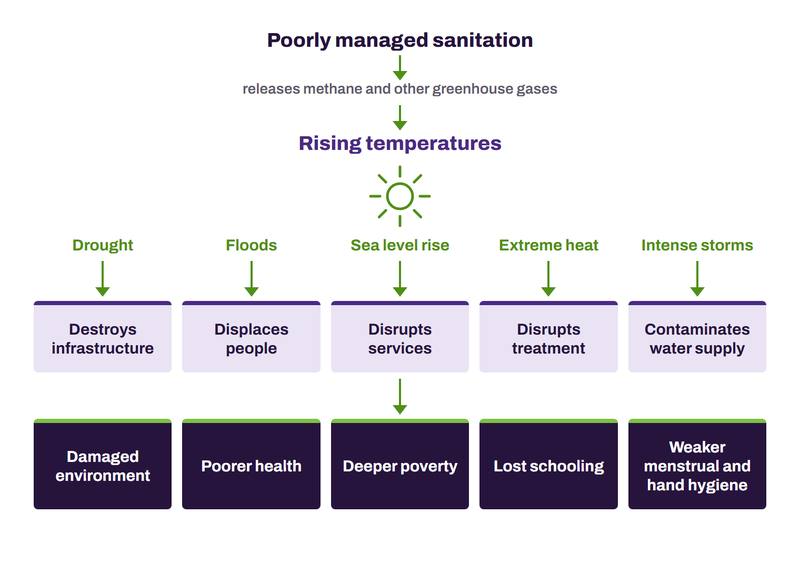
Diagram: poorly managed sanitation releases greenhouse gases that raise temperatures; droughts, floods and storms then destroy infrastructure, displace people and contaminate water
How sanitation and climate change feed each other. Adapted from GWP and UNICEF.

Adaptation: keep working through floods, drought and heat

  • Avoid exposure: raised slabs and sealed, lined pits that floodwater cannot enter.
  • Withstand it: precast linings that do not collapse in heavy rain.
  • Need little water or power: dry and low-flush options, gravity-fed treatment.
  • Recover fast: standard parts artisans can replace in days.

Mitigation: cut emissions along the sanitation chain

  • Safely managed, not just built: sludge emptied, treated and reused.
  • Capture methane: biogas that replaces firewood and charcoal.
  • Compost instead of dumping: avoids methane, replaces synthetic fertiliser.
  • Low-energy treatment: wetlands and baffled reactors without electricity.

The climate case for each solution

SolutionAdaptationMitigation
Market-Based WASH Products
Toilet-in-a-BoxLined pits that resist collapse; slab can be raised above flood level; dry or low-flush options for drought.Twin, emptyable pits make safely managed sanitation possible; produced locally, cutting transport.
Biosand filterSafe drinking water when floods contaminate sources; no power needed.Reduces the need to boil water with firewood or charcoal.
Pit emptyingEmptying before the rains prevents overflowing pits during floods.Regular emptying and treatment limit methane from full pits.
DEWATS
Constructed wetlandsTreated water reused in dry seasons; vegetation cools the neighbourhood; no power to fail.Near-zero energy use; plants and soils store carbon.
Anaerobic baffled reactorsBuried and robust; no electricity or moving parts.No energy use; can be fitted to capture biogas.
Resource Recovery
Compost and co-compostOrganic matter helps soils hold water through drought.Avoids methane from dumped waste; replaces synthetic fertiliser; stores carbon in soil.
BiogasLocal, reliable cooking energy.Captures methane and replaces firewood and charcoal.

Climate services for programmes and cities

Following the GWP and UNICEF framework for climate-resilient WASH: understand the problem, identify options, deliver solutions, and monitor.

Climate risk assessment

Hazards, exposure, vulnerability and capacity along the sanitation service chain.

Climate-resilient design

Design features that avoid, withstand and recover from floods, drought and heat.

Emissions estimates

Direct and indirect greenhouse gas emissions of sanitation options, to choose low-carbon designs.

Climate finance support

The technical and climate rationale for climate-finance proposals and programme design.
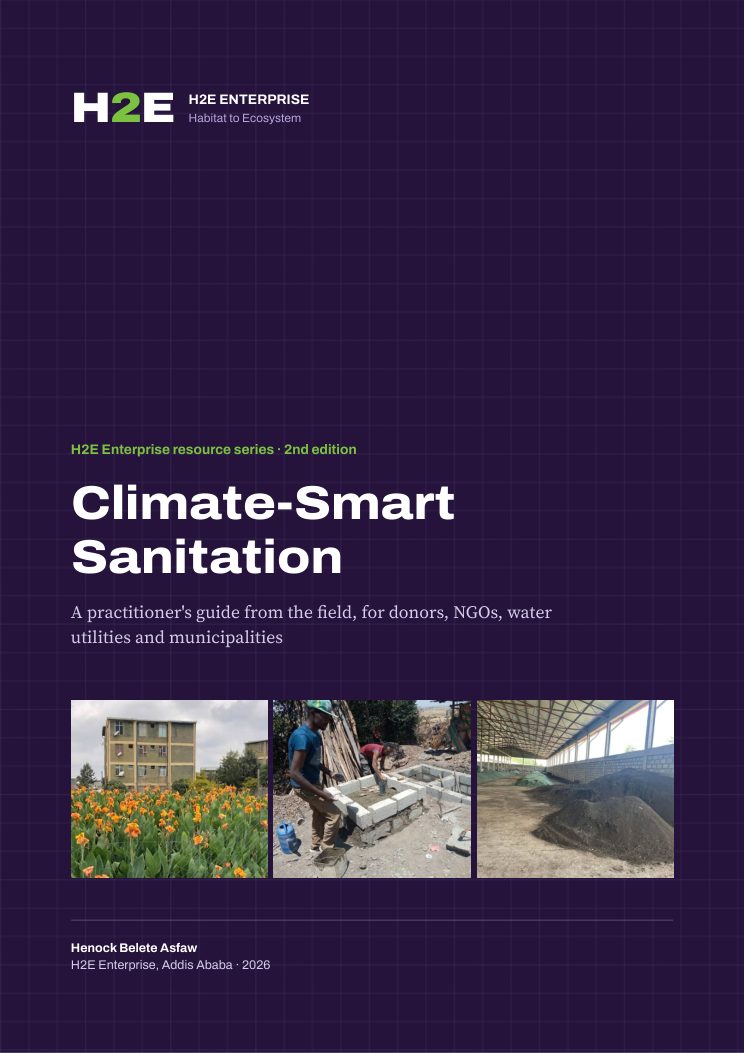
Cover of the H2E guide Climate-Smart Sanitation: A Practitioner's Guide from the Field

Free resource

Climate-Smart Sanitation: A Practitioner's Guide from the Field

Our practical guide for donors, NGOs, water utilities and municipalities: climate hazard scorecards and emission estimates for eight sanitation, wastewater and resource recovery technologies, a tool for choosing the right option, and guidance on climate finance and monitoring.

Henock Belete Asfaw, H2E Enterprise. 2nd edition, 2026. PDF, 36 pages.

Download the guide (PDF)

Bring a proven, climate-smart solution to your programme or city

We supply the design, tooling, training and delivery model, adapted to your context.

Talk to us

Download this resource

It's free. Tell us who you are and your download starts straight away.

We only use your email to share H2E updates and never pass it on. You can ask us to remove it at any time.